
Why passwords are gradually becoming a thing of the past
Passkeys make sign-in more convenient and phishing-resistant, but a secure system also requires carefully designed recovery, session management, and protection for critical actions.
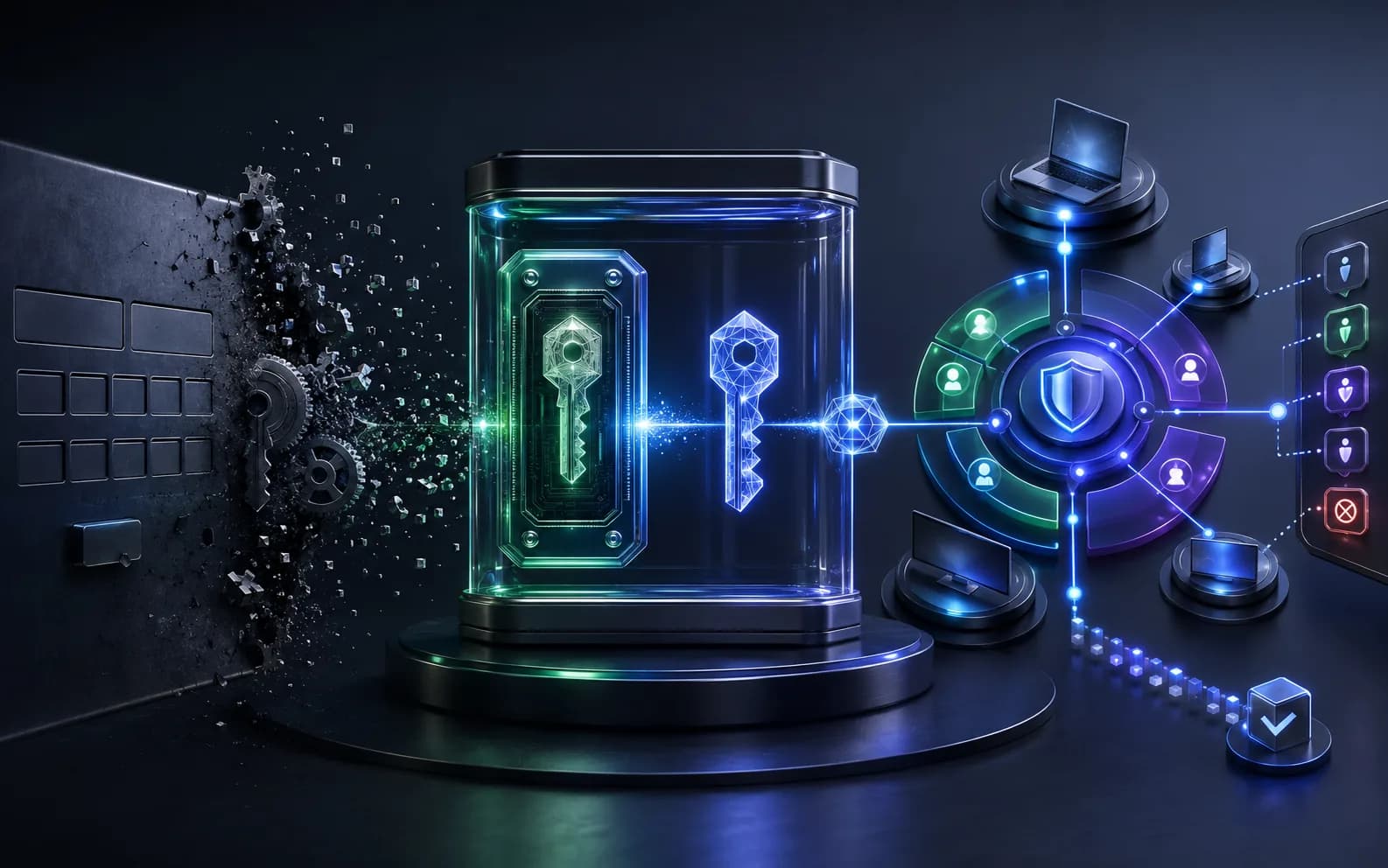
For many years, the password remained the primary way to sign in to digital services. Yet it has a fundamental weakness: a password can be guessed, stolen through phishing, intercepted, reused across different websites, or accidentally disclosed to an attacker. Even a complex combination of characters does not protect a user if they enter it on a fraudulent page.
Passkeys, or digital access keys, are becoming the modern alternative. When one is created, a cryptographic key pair is generated: the private key remains protected on the user’s device or in a trusted credential manager, while the service receives only the public key. To sign in, the user simply confirms their identity with a PIN, facial recognition, fingerprint, or another method used to unlock the device.
This approach makes authentication both more convenient and more secure. The user does not have to create or remember a password, and the key cannot be used on an unrelated domain. Even if the service database is compromised, the public key stored in it will not allow an attacker to access the account.
Moving to passkeys is, however, only one part of a security system. Account recovery after a device is lost, connecting new devices, managing active sessions, suspicious sign-in notifications, and the ability to revoke a compromised key quickly must all be designed in advance. A weak recovery procedure can negate the benefits of even the most modern authentication method.
Employees with elevated privileges and high-risk operations require an additional layer of protection. Changing payment details, appointing an administrator, exporting a client database, or signing a document should require identity re-verification or an additional factor. User permissions must be assigned by role and according to the principle of least privilege, while critical actions must be recorded in an audit log.
The transition to the new model is best made gradually: first offer passkeys as a convenient sign-in method, then strengthen the protection of administrators and financial roles, configure 2FA and additional verification for important actions, and only then reduce dependence on passwords. This allows the company to improve security without creating unnecessary complexity for clients and employees.
Secure authentication: passkeys, 2FA, and access management
I have prepared a detailed PDF guide covering registration and sign-in architecture, account recovery scenarios, device and session management, role-based access control, protection of critical operations, event logging, and a step-by-step plan for moving from passwords to modern authentication.