
A modern website should work like an employee
In 2026, a website should do more than describe a business: it should advise visitors, collect requests, and automate client interactions.
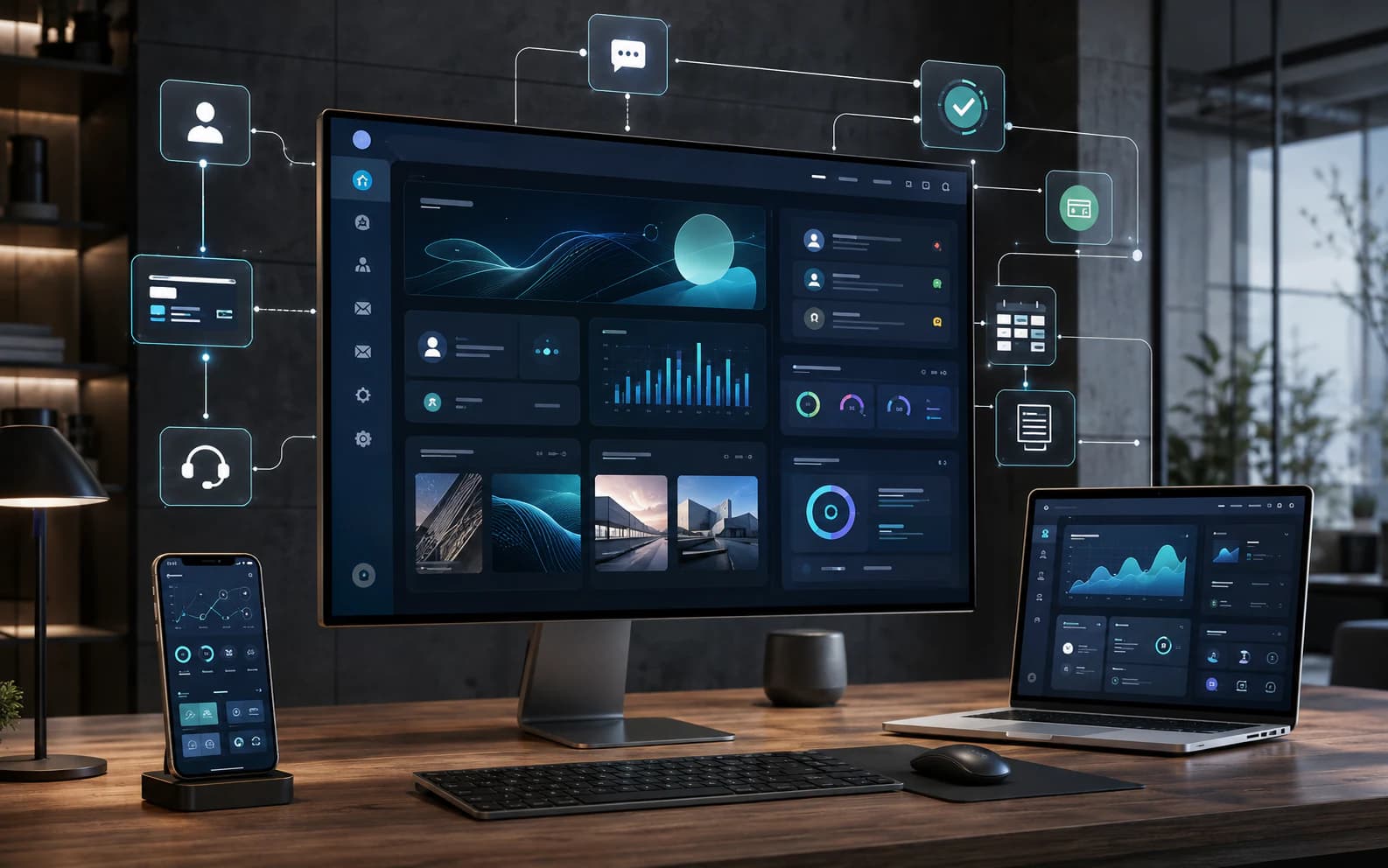
Not long ago, a simple company website with basic information, a list of services, and contact details was enough. In 2026, that is no longer sufficient. A modern website should not merely describe the business; it should perform specific work: welcome the client, understand the request, suggest a suitable solution, accept the enquiry, and pass it to the responsible employee.
A professional website can advise visitors around the clock, collect the required information, calculate prices, accept payments, send documents and notifications, display order status, and preserve the complete interaction history in a client portal. When CRM, a Telegram bot, analytics, and AI tools are connected, individual actions become one automated process.
This does not mean that a website should completely replace people. Its purpose is to remove repetitive manual work, reduce lost enquiries, and give employees more time to communicate with clients and solve genuinely important tasks. That is why development should begin not with colours and animations, but with an understanding of the company’s business processes.
The structure of a professional business website in 2026
I have prepared a detailed PDF guide for entrepreneurs. It covers the essential pages, functional modules, client interaction scenarios, automation options, integrations, and requirements for the admin panel, analytics, security, and search engine optimisation.