
How to know if a business is losing clients
Clients are often lost not because of advertising or service quality, but because of delays, missing statuses, and gaps between enquiry processing stages.
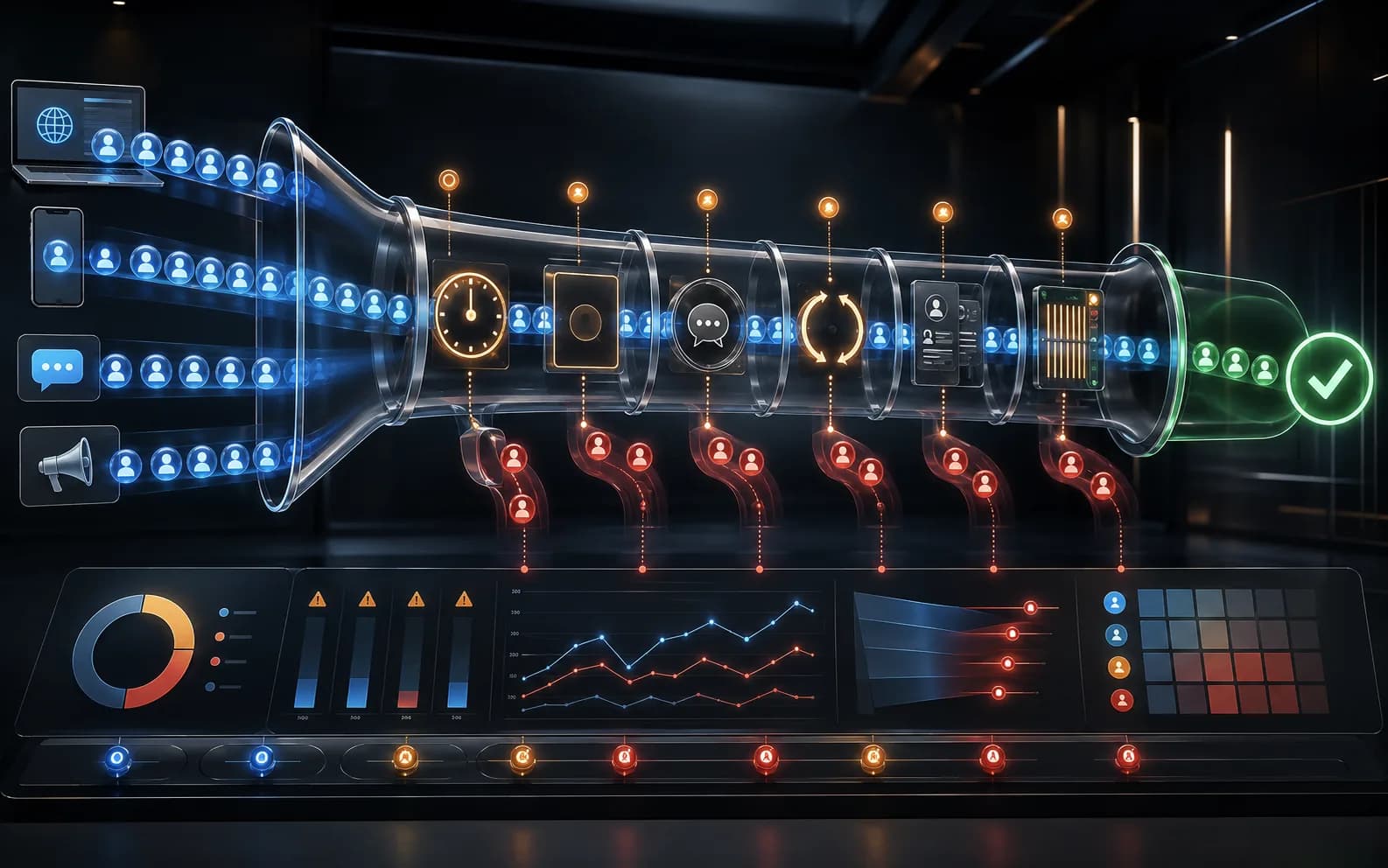
A business can lose clients even when the flow of enquiries remains stable. The problem often lies neither in advertising nor in service quality, but between a person’s first message and the employee’s next action.
A client submits an enquiry but receives a reply several hours later. The manager records the contact in a personal notebook or messenger. After the consultation, no one creates a task for a follow-up call. The deal remains without a status, and the reason for rejection is not recorded anywhere. Individually, these situations may seem insignificant, but together they become a constant loss of sales.
The first signs can be seen in the numbers: traffic is growing while the number of enquiries remains unchanged; there are many enquiries, but too few clients reach payment; deals remain at one stage for too long; management does not know the reasons for rejection; employees store correspondence and documents in different places.
To investigate, the journey of several real enquiries must be traced from source to outcome. It is important to measure first-response speed, the number of contact attempts, the time between stages, whether a responsible employee is assigned, and the final outcome of every enquiry. This audit is intended not to find someone to blame, but to identify weak points in the system.
The CRM, automatic enquiry distribution, mandatory statuses, reminders, follow-up contacts, and rejection-reason analytics can then be configured. Even small changes at individual stages often recover clients who previously disappeared unnoticed.
A checklist for auditing sales, enquiries, and employee performance
I have prepared a detailed PDF guide covering the audit of enquiry sources, response speed, funnel stages, CRM discipline, follow-up contacts, rejection reasons, service quality, and employee oversight.