
CRM is more than just a client list
A genuine CRM preserves the complete history of each client relationship, manages workflows, and helps the team understand what needs to happen next.
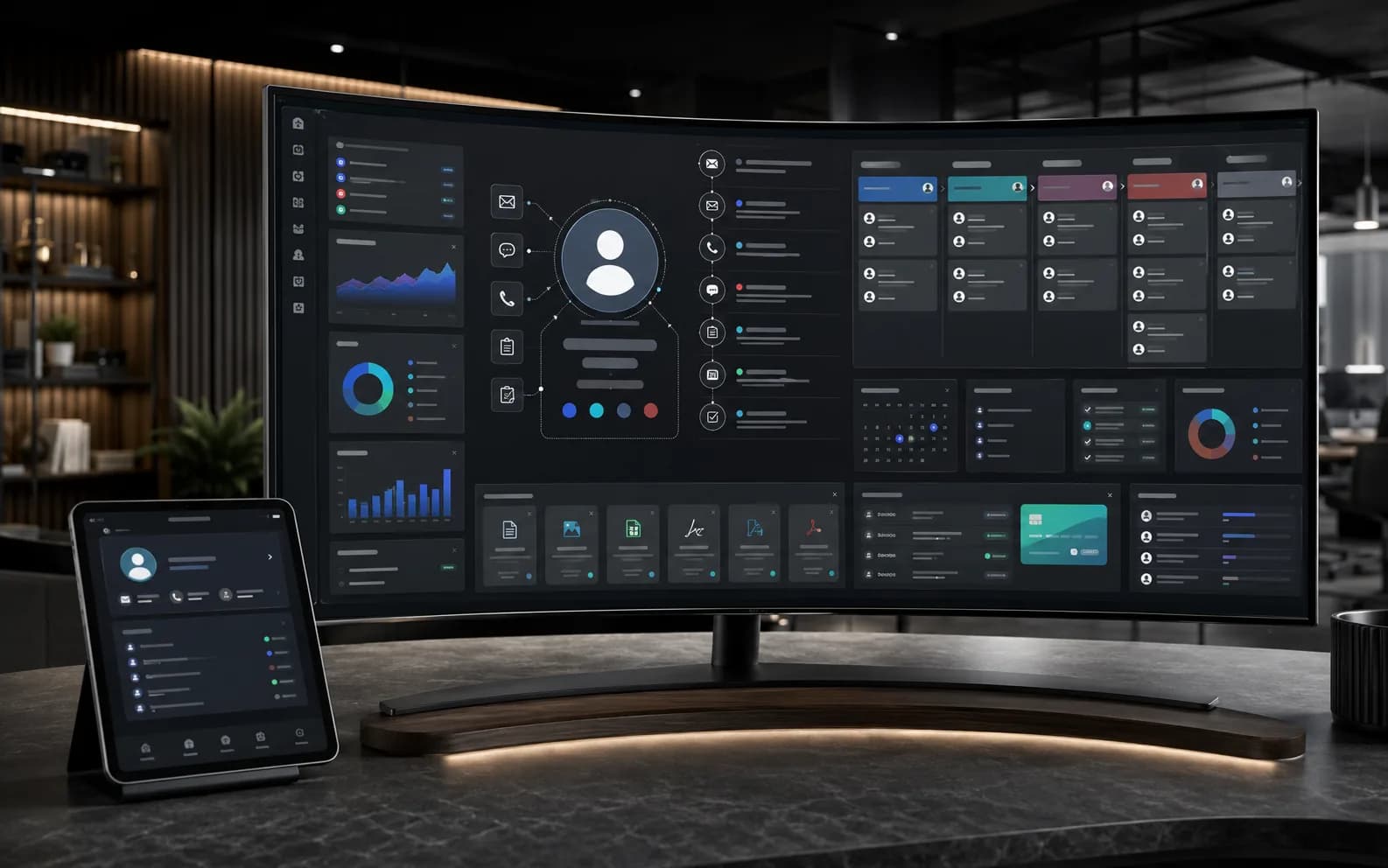
If a CRM is used only to store a name and telephone number, the business receives an ordinary spreadsheet in a more attractive interface. A genuine CRM should present the complete history of the relationship with the client and help employees understand what needs to be done next.
A unified client record can contain enquiries, correspondence, calls, documents, contracts, payments, tasks, and responsible employees. Management can see the stage of every deal, why enquiries are being delayed, and which team actions produce results. A manager no longer has to search for information across different chats, spreadsheets, and folders.
A modern CRM also automates work. It can distribute new enquiries, create tasks, send call reminders, move a deal to the next stage after payment, notify the client, and generate reports. Separate permissions are configured for different roles so that every employee sees only the data and functions they need.
An effective CRM cannot, however, be created simply by copying someone else’s system. First, the company’s real processes must be studied and its workflow stages, employee roles, required data, and performance indicators must be defined. Only then does the CRM become a practical working tool rather than an additional application that the team fills in merely for reporting purposes.
A complete technical specification for a modern CRM system
I have prepared a detailed PDF guide covering the client record structure, sales pipeline, tasks, documents, payments, communications, roles and access permissions, automation, analytics, integrations, security, and mobile version requirements.